We transform your ideas into powerful, user-friendly mobile applications for iOS
and Android that capture attention and deliver results in the Malaysian market.
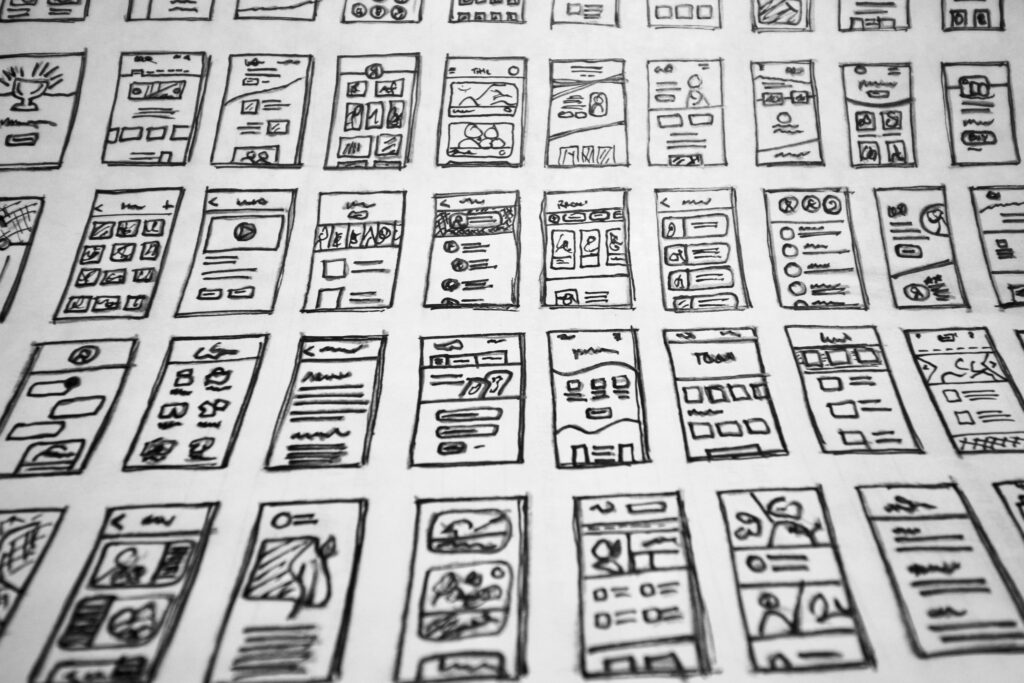
In Malaysia’s mobile-first market, a high-quality app is essential. We
combine local market insights with world-class development expertise to
build apps that not only look stunning but also perform flawlessly and meet
your business objectives.
We provide a full spectrum of mobile app development services to cover your
every need.
We build high-performance, platform-specific apps for iOS and Android, ensuring the best user experience and access to native device features.
Reach a wider audience with a single codebase. We use frameworks like React Native and Flutter to build beautiful apps that run smoothly on both platforms.
Our apps are built on a solid foundation, designed for scalability and performance to grow with your user base and business needs
We prioritize data security and adhere to industry best practices and compliance standards to protect your users and your business.
A proven, transparent process to ensure your project’s success from start to
finish.
We start by understanding your
vision, target audience, and
business goals to create a solid
project roadmap.
Our design team creates intuitive,
engaging interfaces and
prototypes that bring your app
concept to life.
Our agile development process
ensures quality code, followed by
rigorous testing to deliver a bug
-free product.
We handle the app store submission process and provide ongoing maintenance and support
to ensure your apps success.
Let’s turn your mobile app idea into a reality. Contact Solaris IT Solutions today
for a free consultation on your software development project.
There is no single fixed price, but in Malaysia a professional mobile app usually starts around RM20,000–60,000 and can go to RM100,000–450,000+ depending on complexity, features, and platforms.
| App type | Approx. cost (RM) | What it usually includes |
|---|---|---|
| Very simple app | RM15,000 – RM30,000 | Basic screens, no real‑time data, minimal backend, 1 platform only. lizard+1 |
| Simple / MVP app | RM30,000 – RM60,000 | User login, basic data, simple backend, maybe one‑platform (Android or iOS). synuos+1 |
| Medium‑complex app | RM60,000 – RM150,000 | Android + iOS (or Flutter), API integrations, payment, admin panel; typical for SMEs and startups. mediaplusdigital+2 |
| Complex / enterprise app | RM150,000 – RM450,000+ | AI, real‑time tracking, multiple integrations, strong security, multi‑user roles, etc. jploft+1 |
Yearly Averages:
Overall average mobile app developer salary: around RM43,000 – RM44,000 per year (≈ RM3,500 – RM3,700/month) in broader surveys, but real‑world salaries in KL/Penang tend higher.
Senior‑level data can show averages closer to RM130,000–150,000 per year (≈ RM11,000–13,000/month) in larger companies or fintech/gaming hubs.
Fixed‑price project
Common for agencies and experienced freelancers; easier to budget.
Hourly / daily rate
Typical Malaysian mobile‑app‑dev hourly range: about RM70–250/hour, or RM300–1,600/day depending on seniority.
A junior dev may charge RM300–550/day, a senior RM900–1,600/day.
If you work full‑time, you can roughly think in month‑equivalent:
Junior dev: ≈ RM3,000–5,000/month
Senior dev: ≈ RM8,000–15,000/month
So a 3‑month project with a senior dev might sit around RM24,000–45,000+ in pure development time, before overhead or profit margin.
Making $3,000 per day from a mobile app is possible, but it’s not about “just coding” – it’s about business model + audience + monetization at scale. Below is a realistic, step‑by‑step way to aim for that, not just “hype.”
1. Pick a money‑making app type
Apps that can realistically reach $3,000/day usually fall into:
Subscription apps (e.g., SaaS, productivity, SaaS‑style content)
E‑commerce / marketplace apps (take a cut per transaction)
Frequent‑purchase / in‑app‑purchase (IAP) apps (games, beauty, fitness, dating)
Ad‑heavy apps (only realistic at very high traffic, e.g., millions of users).
For $3,000/day = ~$90,000/month, you need either:
High‑value customers (few but big spenders), or
High volume + low‑cost product (lots of small purchases).